Reducing heat and noise of my homelab mini PC
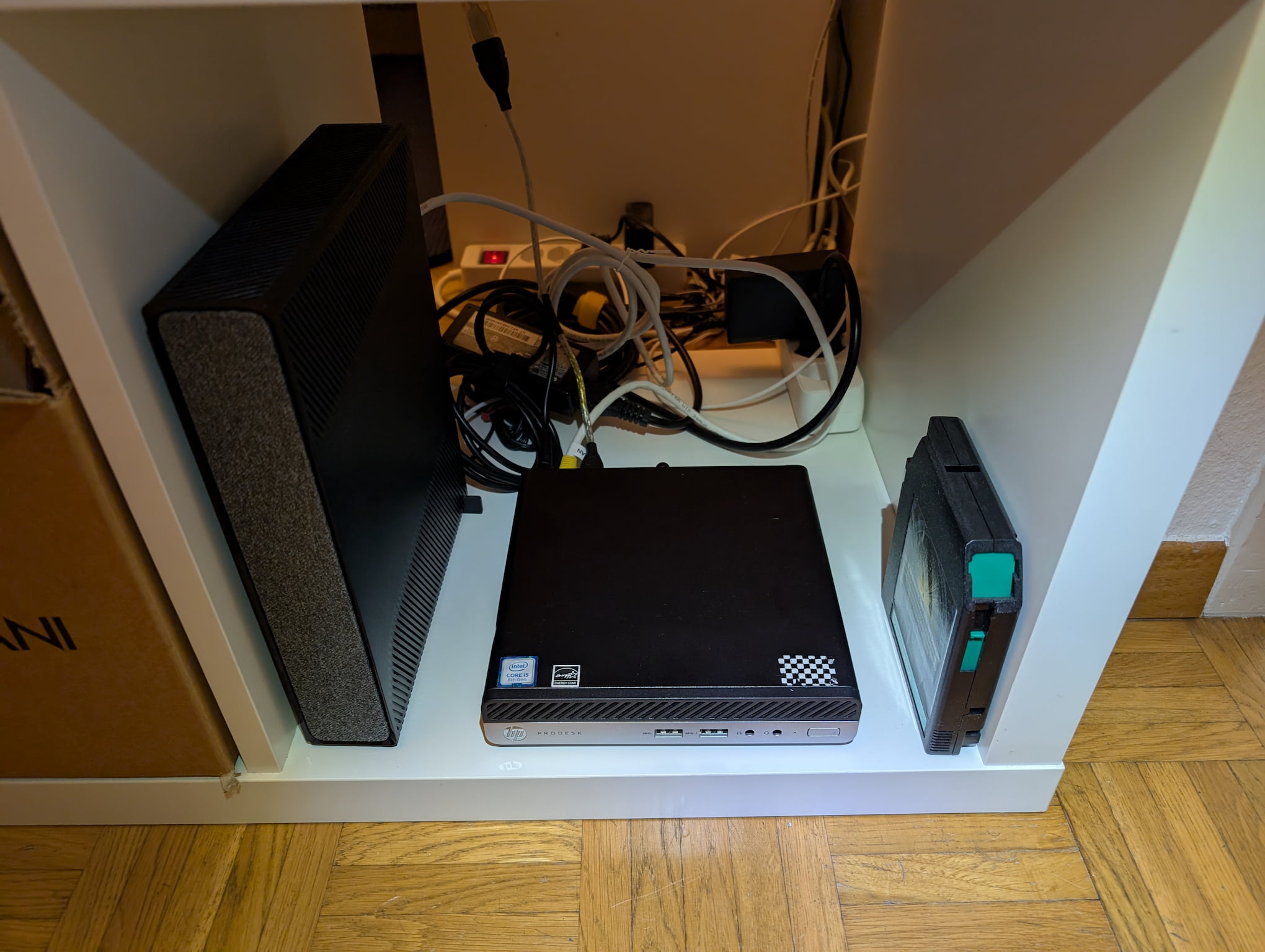
Recently, the machine which I’m using for selfhosting various services at home has been getting increasingly noisy. This was starting to be annoying since HP Prodesk G4 is located in my living room as this happens to be the most convenient spot because it’s right next to the Internet router. Especially given the fact that the fan inside this machine is tiny (it’s essentially a standard laptop fan) and therefore makes a high pitched sound when it’s spins at high RPMs. While I have certainly increased the total amount of services I run on this machine, the overall CPU load did not seem to be any higher, i.e. it did not explain the need additional noise.
I decided to order some thermal paste online and open the machine up to seee what’s going on (important: first do step 1, then step 2). I was expecting to maybe find old and dry thermal paste under the CPU heat sink, given the fact that I have been running this small device continuously for several years at this point. However, what I found below surprised me!
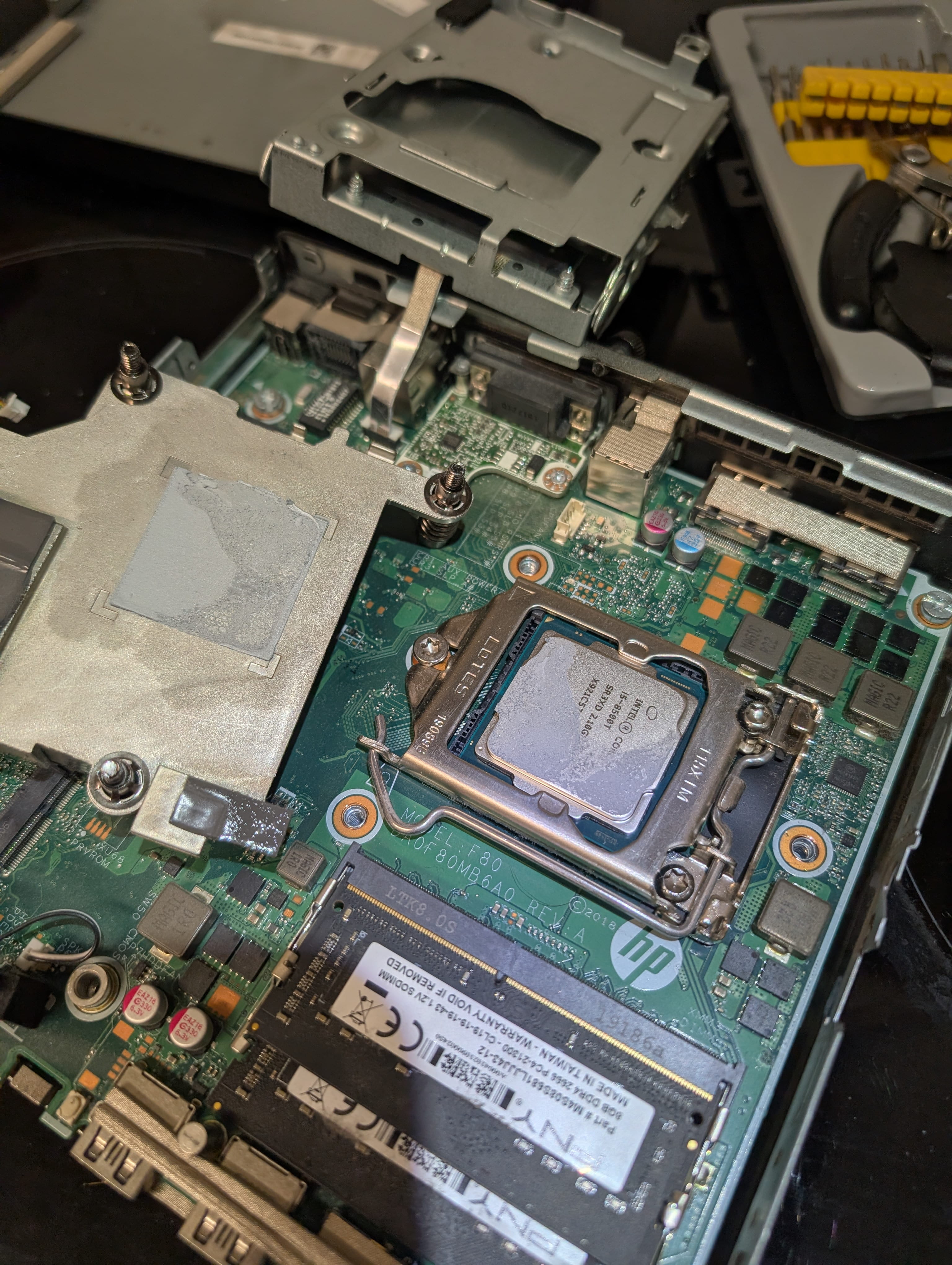
From a chemical perpective the thermal paste was still in good condition. But despite the fact that on the heat sink the entire square where the processor meets the aluminum was covered with thermal paste (left side in the picture), only about half of the CPU was even touching the thermal paste (right side) - and therefore the heat sink in general. It seems like the tolerance on these mass-produced, low-power, tiny/mini/micro PCs are rather loose.
Anyway, I cleaned up the old thermal paste from the heat sink and the CPU itself with some silicone based cleaner and applied a generous amount of thermal paste on the CPU. The standard recommendation is to use a minimal amount of thermal paste between the CPU and the heat sink, but in this case where the mating between these two surfaces is not very even, so a bit more thermal paste can help to compensate that.
I also took the opportunity to clean the rest of the device using my new favorite tool: the Wolfbox Super Power Turbofan MegaFlow200. It’s a portable air duster, think about it as tiny handheld leafblower. In the house it can replace many use cases that are traditionally served by compressed air: cleaning dust and other debris, drying surfaces, gaps and holes, as well as annoying your girlfriend - oh wait I was not supposed to say that.
Over the last couple of years, these devices in this category have become seriously powerful (despite the gimmicky marketing slogans). The combination of a built-in battery, fast charging via regular USB-C and the small form factor makes these devices extremely handy. These portable air dusters have also become quite cheap (starting at 20-30 EUR).
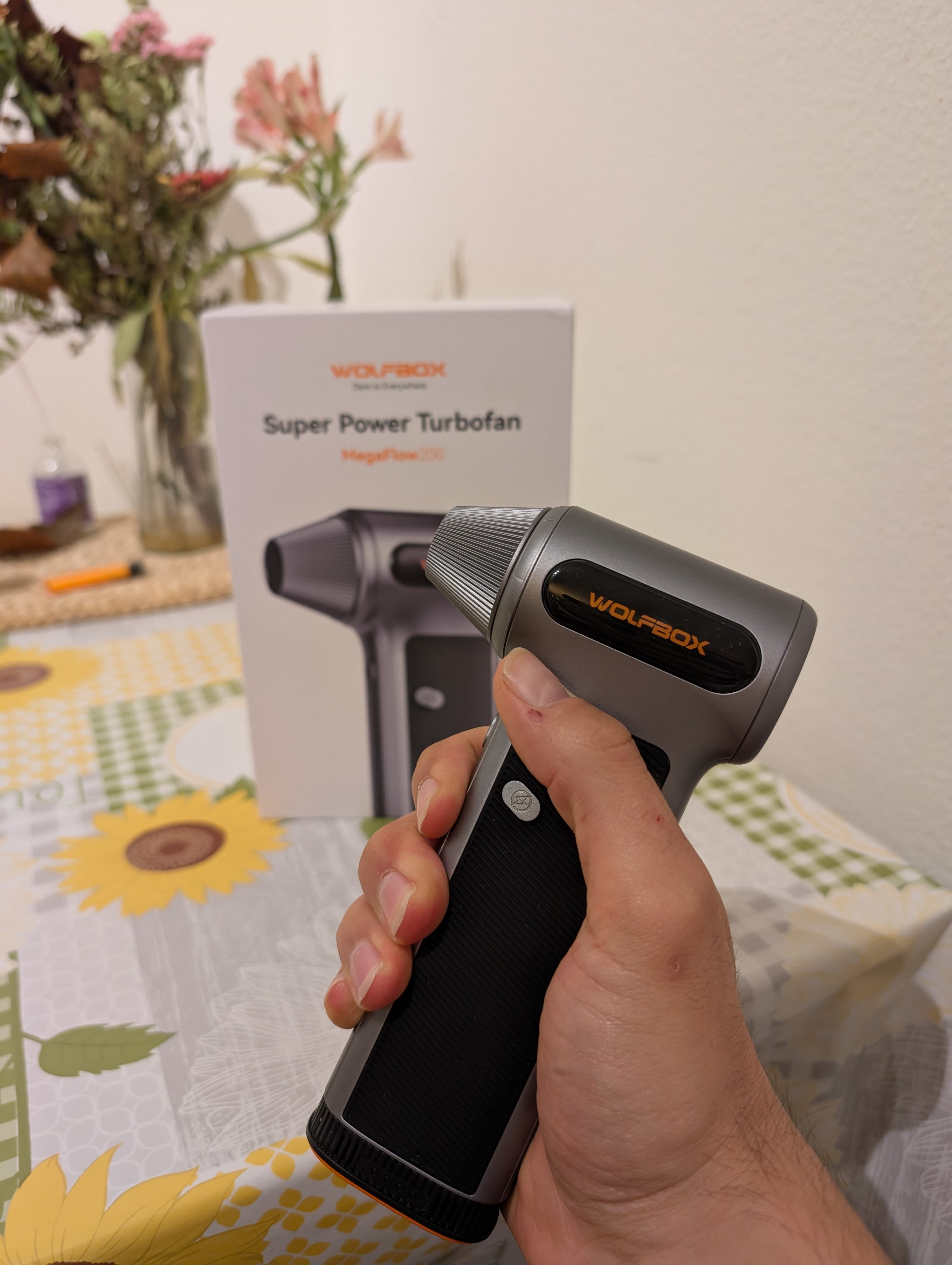
The Wolfbox MF200 is a bit more pricy (I bought it for 80 EUR), but it’s also by far the best in this category. I won’t give a full review here, but I recommend you check out this video from Torque Test Channel (one of my favorite channels on YouTube for hardware tool tests):
After reassembling everything and observing the change over the course of a couple of days, I can confirm that the system is quieter at this point (basically inaudible again). This machine also hosts the blog you’re reading right now.
Happy homelabbing!